



We use cookies to improve your experience.
All Posts
9 min read
How to Create On-Brand Content at Scale Without a Single Photoshoot
AI powered content creation lets brands produce hundreds of on brand marketing assets (photography, video, and endless variations) in minutes, without booking a photoshoot. The catch is that generic AI output is worse than none: you have to encode your brand first so every asset stays on brand. Here’s how to do it right.
A single professional photoshoot for a GCC food & beverage brand costs between $15,000 and $50,000. That covers the photographer, studio rental, food stylist, props, talent, retouching, and the two to four weeks of lead time. For a brand running campaigns across multiple markets and channels, that’s six to twelve shoots per year, somewhere between $100,000 and $600,000 annually, just for visual content.
And here’s the part that keeps CMOs up at night: after all that investment, each shoot produces a fixed set of assets. Need a variation for Instagram Stories instead of feed? A different model for the Saudi market versus the UAE? A seasonal adaptation for Ramadan? That’s another shoot.
There’s a better way. AI-powered content creation can produce hundreds of on-brand assets in minutes, at a fraction of the cost, without sacrificing quality or brand integrity. But the key word is “on-brand.” Generic AI outputs are worse than no AI at all. Here’s how to do it right.
Step 1: Build Your Brand Foundation
The biggest mistake teams make with AI content creation is jumping straight to generation without first encoding their brand. The result is content that looks technically competent but feels generic, the uncanny valley of marketing.
Before generating a single asset, you need to upload and codify:
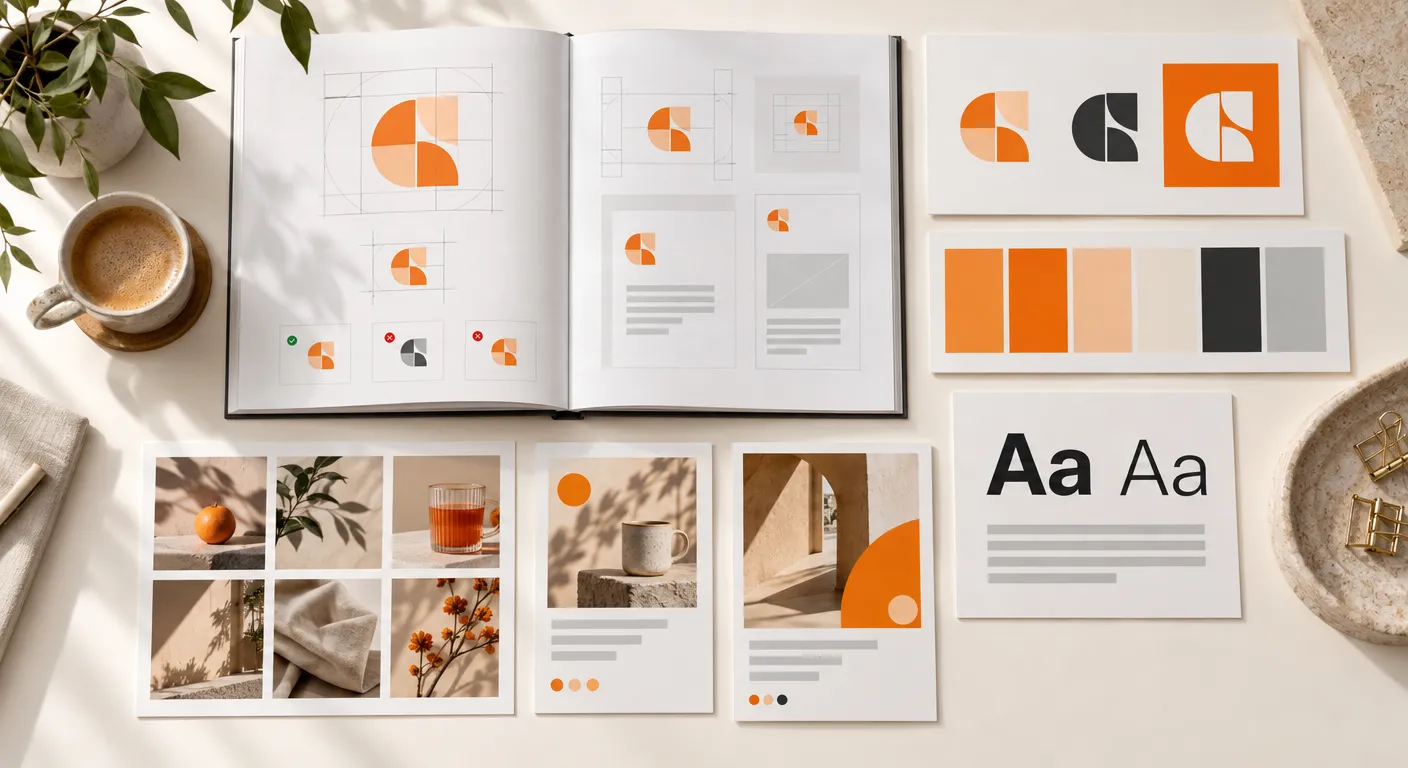
Visual identity assets. Logos (all variations), brand colors (exact hex codes, not approximations), typography (primary and secondary fonts), and any graphic elements or patterns that define your visual language.
Photography guidelines. This is where most brands under-invest. Define your lighting style (bright and airy? moody and dramatic?), composition preferences, color grading, and the overall “feel” of your imagery. If your food photography always uses natural light and rustic surfaces, that needs to be explicit.
Product catalogue. Every product, every SKU, every variation. The AI needs to know exactly what your products look like from every angle, in every configuration.
Brand voice and tone. Not just “professional yet approachable”, but specific examples of copy that nails your voice, and examples that miss it. Include rules for each market if your tone shifts between regions.
This one-time setup is the difference between AI that produces generic content and AI that produces your content. Think of it as training a new team member, except this team member has perfect memory and infinite patience.

Step 2: Generate Assets at Scale
With your brand foundation encoded, generation becomes the fast part. Here’s what the workflow looks like for a typical campaign:
Start with the brief. Define the campaign objective, target audience, channels, and any market-specific requirements. If your planning system is connected to your performance data, the brief should already include intelligence about what has worked before.
Select formats and variations. A single campaign might need assets for Instagram feed, Stories, Reels, LinkedIn, website banners, and email headers, each with different aspect ratios, copy lengths, and visual treatments. Instead of briefing these individually, select the formats you need and let the system generate all variations simultaneously.
Generate and review. AI produces the initial batch. For a typical product campaign, this means 50-150 assets across all formats and market variations. Review time is spent curating and refining, not creating from scratch.
Iterate instantly. This is where AI creation fundamentally changes the economics. Don’t like the lighting on the hero shot? Adjust and regenerate in seconds, not days. Need to swap the background for a Ramadan campaign? That’s a prompt change, not a reshoot. Want to test five different headline approaches? Generate all five.
The speed isn’t just about efficiency. It’s about creative freedom. When generating a variation costs seconds instead of thousands of dollars, you experiment more. And more experimentation means more data about what works.
Step 3: Enforce Brand Compliance Automatically
Speed without quality control is just fast chaos. The third step is automated compliance checking, ensuring every asset that leaves your system meets brand standards.
Visual consistency checks. Does the asset use approved colors? Is the logo placed correctly? Does the imagery match your photography guidelines? These checks happen automatically, not through a human review bottleneck.
Copy compliance. Does the text follow your brand voice guidelines? Are there any regulatory issues (particularly important for F&B, healthcare, and finance)? Are market-specific language requirements met?
Cultural appropriateness. This is especially critical for MENA markets. Is the imagery appropriate for the target market? Are there any cultural sensitivities to flag? Does the Arabic copy use the right dialect and register?
Automated compliance doesn’t replace human judgment. It handles the 80% of checks that are rule based so your team can focus their attention on the 20% that require creative taste.
Step 4: Publish and Capture Performance Data
The final step closes the loop. When assets go live, their performance data needs to flow back into your system, not into a separate analytics dashboard that nobody checks until the quarterly review.
Tag assets with metadata. Every published asset should carry information about its creative attributes: visual style, messaging approach, product featured, market, channel, and format. This isn’t extra work. It’s metadata that was defined during generation.
Track performance at the asset level. Aggregate campaign metrics are useful for reporting but useless for learning. You need to know which specific visual style drove engagement, which headline approach converted, and how performance varied by market.
Feed learnings back into planning. The next time someone creates a brief for the same product, market, or channel, the system should surface what worked. “Hero shots with natural lighting outperformed studio setups by 40% in Saudi Arabia” is an insight that should appear automatically, not one that requires a manual analysis.

The Real Numbers: Photoshoot vs. AI Production
Let’s make the cost comparison concrete for a mid-size GCC brand running quarterly campaigns across three markets:
Traditional photoshoot model:
- 4 shoots per year × $30,000 average = $120,000
- 2-4 weeks lead time per shoot
- Fixed output: ~50-80 final assets per shoot
- Variations for different markets/channels: additional shoots or manual editing
- Annual asset output: ~200-320 assets
- Cost per asset: $375-600
AI-powered production model:
- Brand foundation setup: one-time investment
- Generation: minutes per campaign
- Output per campaign: 100-200+ assets across all variations
- Unlimited iterations and seasonal adaptations
- Annual asset output: 1,000+ assets
- Cost per asset: drops by 80%+
But the cost savings aren’t even the most important part. The real value is in the feedback loop. When you can generate and test variations at near-zero marginal cost, you learn what works faster. When you learn faster, your ROAS compounds.
Addressing the Elephant in the Room: Quality
“But does AI-generated content actually look good enough?”
It’s a fair question, and the honest answer is: it depends entirely on the system. Generic AI tools that take a text prompt and produce an image? Those produce content that looks AI-generated. It has that telltale smoothness, the strange lighting, the inconsistent product representation.
But AI content creation that’s built on your brand foundation (trained on your actual products, your photography style, your visual language) produces output that’s indistinguishable from traditional production for the vast majority of use cases.
The distinction matters. This isn’t about replacing a luxury brand’s hero campaign shot by Annie Leibovitz. It’s about the other 95% of content that a brand needs: social media assets, performance marketing creatives, seasonal variations, market adaptations, A/B test variants. For this volume of content, AI production is not just cheaper. It’s often better, because you can iterate and optimize in ways that are economically impossible with traditional production.
The teams seeing the best results aren’t using AI to replace their creative process. They’re using it to amplify it, taking one strong creative direction and scaling it across every format, market, and variation they need, while maintaining the brand integrity that took years to build.
FAQ
Does AI-generated content look generic?
Generic AI content created from text prompts alone often does look recognizably AI-generated. However, AI content creation systems built on your specific brand foundation (your actual product photography, visual guidelines, color palette, and style preferences) produce output that matches your existing brand quality. The key difference is whether the AI is generating from generic training data or from your encoded brand identity.
What about brand consistency across AI-generated assets?
Brand consistency is actually one of AI’s strongest advantages over traditional production. When your brand guidelines are encoded into the system (colors, fonts, photography style, composition rules) every generated asset automatically complies. There’s no risk of a freelance photographer interpreting your guidelines differently, or an external agency drifting from your visual language. Consistency becomes systematic rather than dependent on individual execution.
How much does a typical photoshoot cost compared to AI content creation?
A single professional photoshoot for a GCC brand typically costs $15,000-$50,000, including photographer, studio, styling, talent, and retouching, with a 2-4 week lead time. AI powered content creation reduces per asset costs by approximately 80% while also dramatically increasing output volume. A single campaign can generate 100-200+ assets across all formats and market variations in minutes rather than weeks.
Can AI content creation work for regulated industries like healthcare or finance?
Yes, but compliance automation becomes especially important. AI content creation platforms can enforce regulatory requirements (such as mandatory disclaimers, restricted claims, and approved terminology) as part of the generation process. Every asset is checked against compliance rules before it’s approved for publication. This is actually safer than manual processes, where regulatory requirements depend on individual reviewers catching issues.
Free Social Audit
See what already works, for free
Rawa reads what you have already published on Meta, Instagram, TikTok and Facebook: what your spend returned, which content earned engagement, how far your brand travelled. Connect your accounts and the report lands in your inbox with recommendations.
Blog
View allRelated posts

Ad Creative Testing: How to Test Properly
Ad creative testing done properly: what to test in order of impact, how to run a test that means something, and why supply quietly stops most programmes.

AI Creative Platform: How the Create, Measure, Learn Loop Works
An AI creative platform produces content, measures every asset, and uses the results to shape what gets made next. Here is how each stage of the loop works.
Brand Kit: Keeping a Brand Consistent at Scale
What goes in a brand kit, how to build one people actually follow, and why a brand kit alone stops working once content volume and AI production scale up.